
Socks for Tired, Aching & Swollen Legs
Tired, aching, swollen legs at the end of the day are one of the most common reasons people come to us.
- Free shipping on every order
- 1-year replacement guarantee
- Knit in Alabama
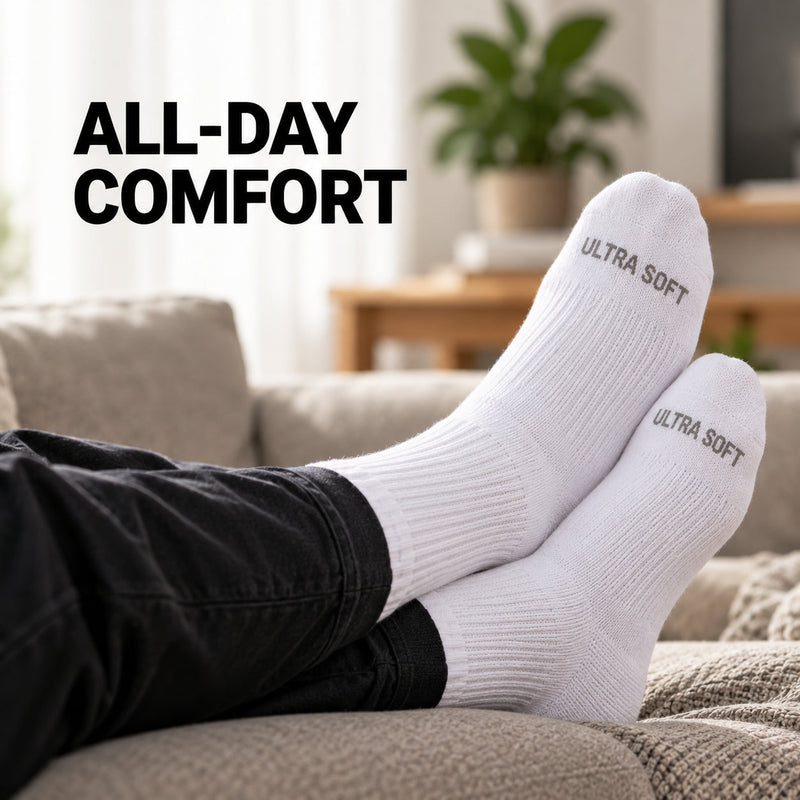
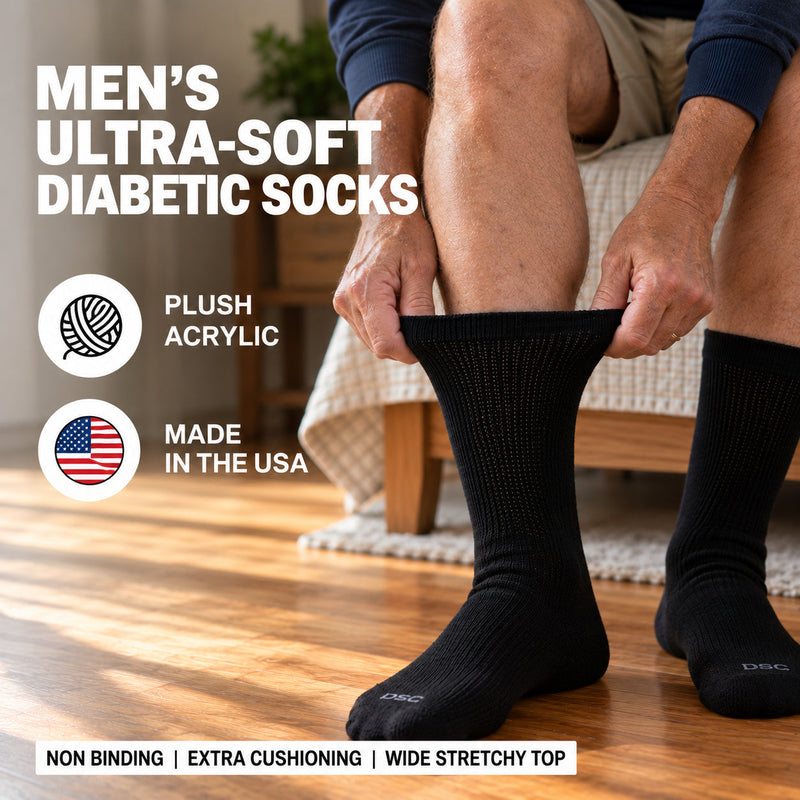
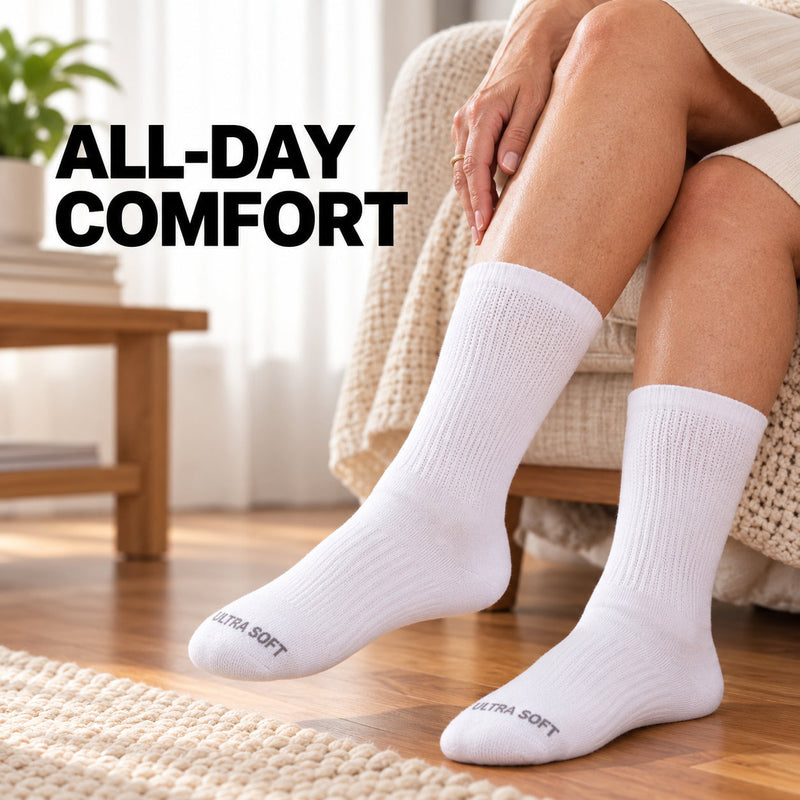
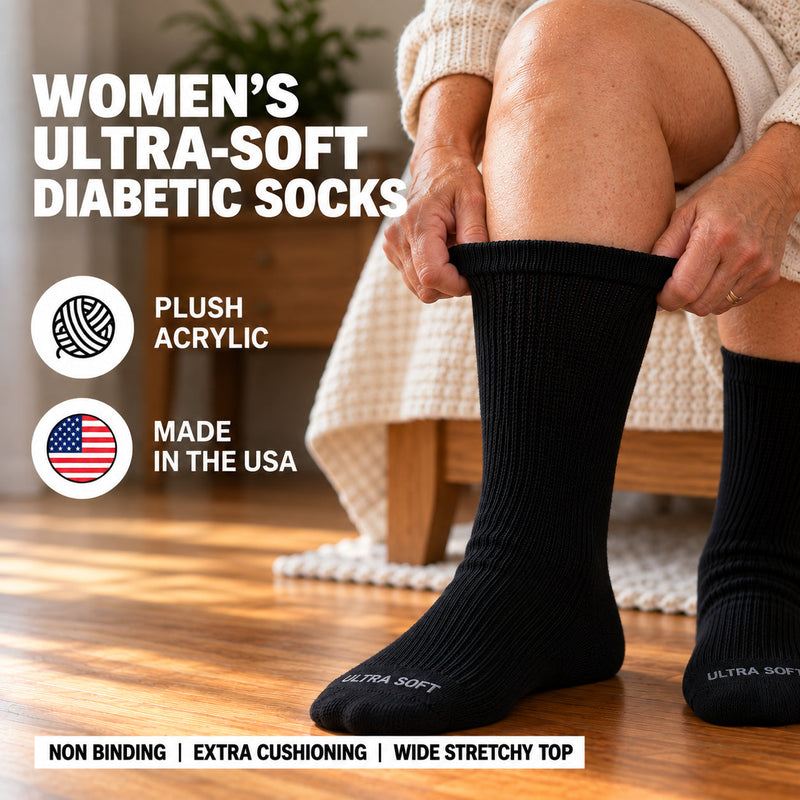
Wear them. Wash them. Still covered.
If a pair gets a hole or wears out within a year, send it back and we replace it free.
How it works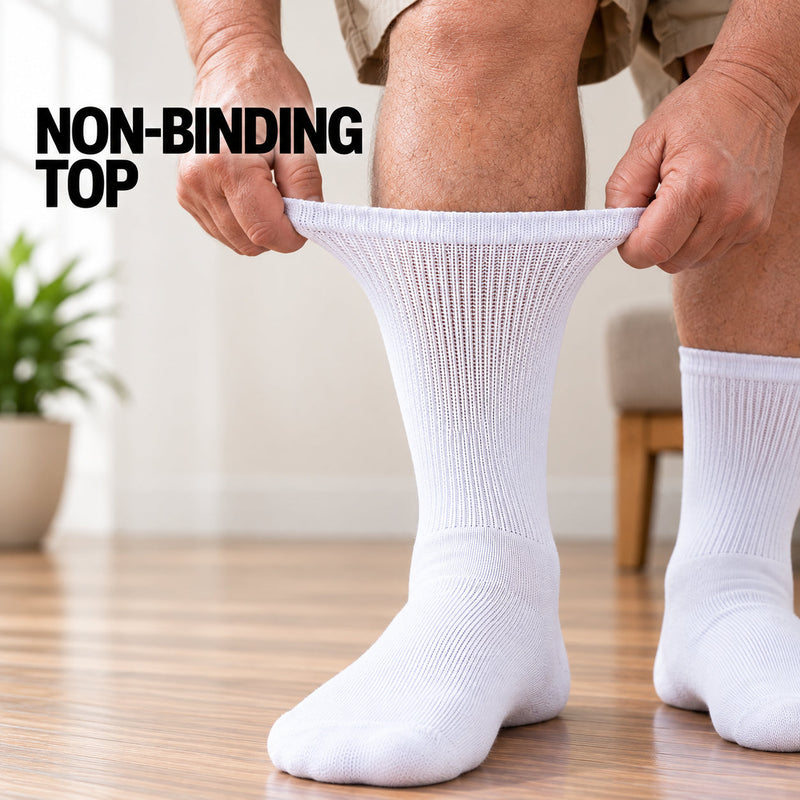

Why pick Diabetic Sock Club?
No squeeze
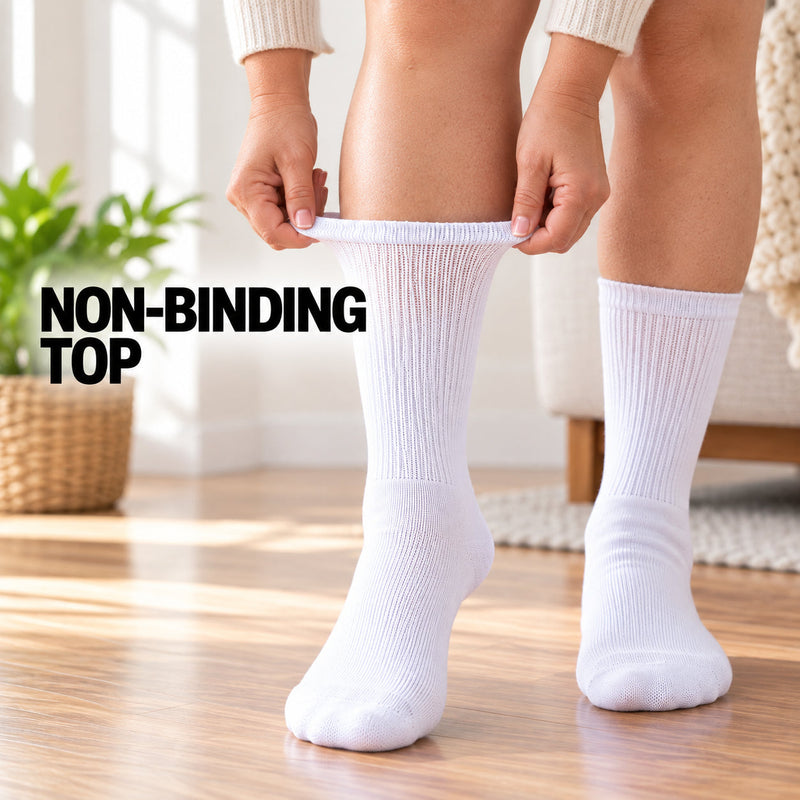
A wide, non-binding top that holds gently instead of gripping, so there is no tight band and no red ring at the end of the day.
Built smooth
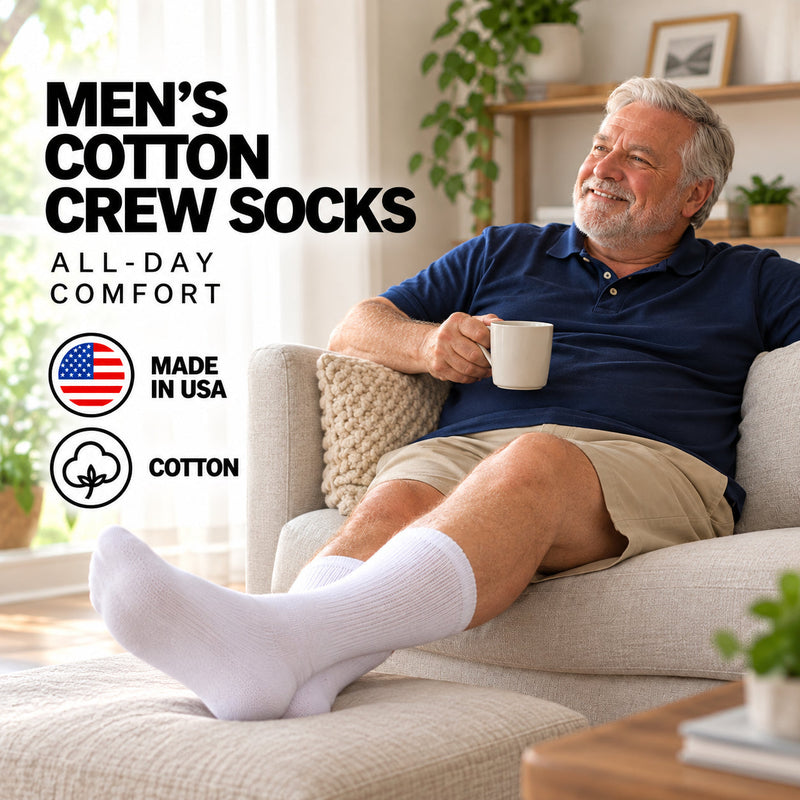
A smooth, flat toe seam with no ridge to rub, and a cushioned sole underfoot. Knit on knitting machines in Alabama.
A full year to decide
Hole or worn out within a year? Send them back and we'll replace them free.
Built for feet that need room
What every pair does, whether you are on your feet all day or resting them.
Non-Binding Top
Knit wide so the hold is spread across the whole top instead of one tight elastic band. Stays up without digging in.
Room for a Wider Calf
The stretchy top opens wide and sits flat on a fuller calf or a swollen ankle, without rolling down or gripping.
Smooth Toe Seam
Finished flat, so there is no ridge sitting across your toes inside a shoe or a slipper.
Soft and Cushioned
Moisture-wicking cotton with a cushioned sole, gentle on sensitive skin and comfortable for a long day on your feet.
Real feet. Real days.
Legs that have done a lot of walking, in socks that stay up and never dig in.


Questions before you order
Which style should I start with?
For everyday wear, start with the Cotton Crew: soft cotton, cushioned sole, non-binding top. If your feet are cold or your ankles swell, the Ultra-Soft Upper Calf has the widest, stretchiest top we make. If you have been told to wear compression, the Over The Calf Compression comes in three strengths.
How do the sizes run?
Sizes go by your everyday shoe size, and the exact range for each style is on its product page. Between sizes, go up.
Will they fit a wider calf?
The top is knit wide and stretchy, so it sits flat on a fuller calf without gripping. The Ultra-Soft Upper Calf has the most room. If you are unsure, call us on (800) 214-0218 and we'll tell you honestly.
What if a pair wears out?
If a pair gets a hole or wears out within a year of buying it, send it back and we'll replace it free, including the pairs you have already worn and washed.
Still not sure? Call us on (800) 214-0218, weekdays 9–3 EST.
About Socks for Tired, Aching & Swollen Legs
Tired, aching, swollen legs at the end of the day are one of the most common reasons people come to us. Legs feel heavy. Ankles look puffed by evening. Socks leave a ring. It is uncomfortable, it is tiring, and the sock you put on in the morning makes a real difference to how the day feels.
Every pair below is manufactured in Alabama, USA with a smooth toe seam and a non-binding or graduated knit — nothing that digs in. Free shipping on every order, backed by our 1-year replacement guarantee. Rated 4.6 out of 5 from more than 3,850 customer reviews.
Two Different Socks for Two Different Evenings
People searching for help with tired, swollen legs usually end up choosing between two very different things, and the difference matters more than the price.
Graduated Compression — Snug On Purpose
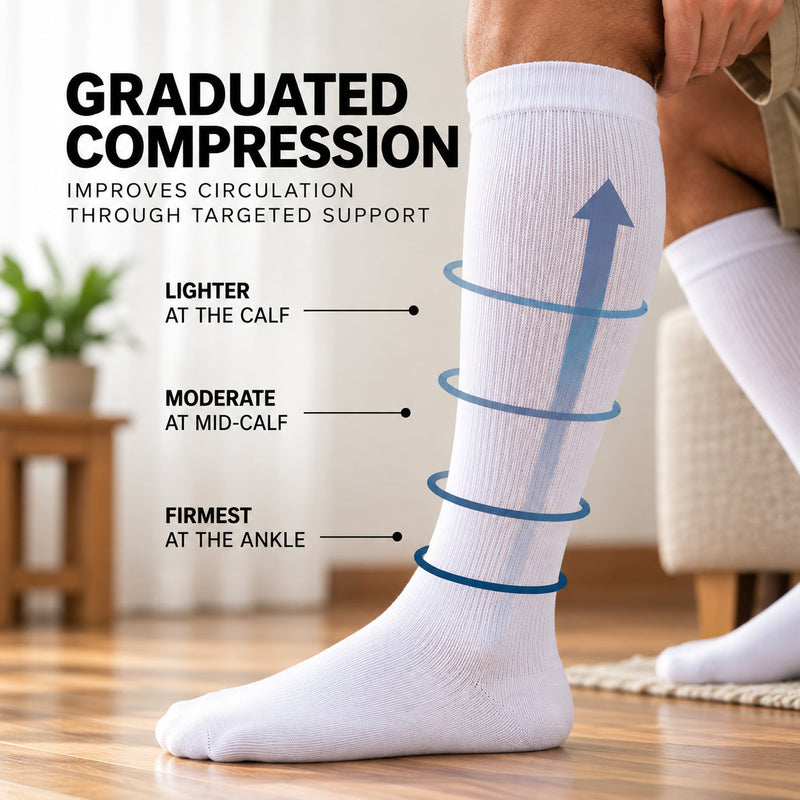
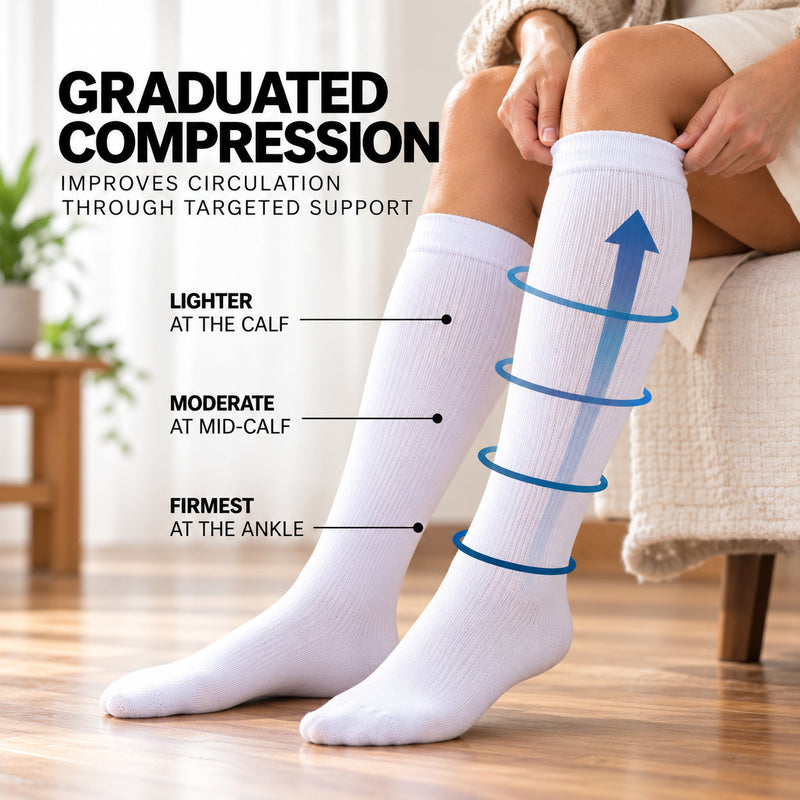
Compression socks are firmest at the ankle and ease as they go up the calf. They are meant to feel snug; that is the point of the product. We sell them in three strengths — 8-15 mmHg (light), 15-20 mmHg (moderate) and 20-30 mmHg (firm) — and none of them require a prescription. Which strength suits you, or whether compression suits you at all, is a question for your doctor or podiatrist, particularly if you have diabetes, a circulatory condition or any history of leg problems.
Non-Binding — No Squeeze At All
A non-binding sock does the opposite. Instead of tight elastic, the top is a wide relaxed band that holds its place through fabric tension. Nothing grips the calf, nothing leaves a mark, and the sock accommodates a foot that changes size through the day rather than getting tighter as it swells. For a lot of people this is the evening sock, and compression is the daytime one.
Not sure which one you want?
Five quick questions and we’ll point you at the right pair.
Take the Sock Quiz →Understanding the mmHg Numbers
Compression is measured in millimetres of mercury. Higher is firmer, not better:
- 8-15 mmHg (light) — the gentlest we sell. A common choice for long days on your feet, desk work and travel. No prescription needed.
- 15-20 mmHg (moderate) — the mid-range, and the one nurses and frequent flyers most often ask for. No prescription needed.
- 20-30 mmHg (firm) — the firmest range we stock. Still available over the counter, but this is the level worth asking your doctor about before you buy.
- 30-40 mmHg and above — we do not sell this. It needs a healthcare provider’s guidance.
If you are new to compression, most people start lower than they expect to. A sock you actually wear every day beats a firmer one that lives in the drawer.
What to Look For, Whichever You Choose
- Smooth toe seam — a raised seam rubs, and rubbing is what you are trying to avoid.
- Room at the top — a calf that swells through the day needs a band that gives, not one that digs in further.
- Moisture-wicking knit — damp feet are uncomfortable feet.
- The right length — over-the-calf covers the whole lower leg; crew stops mid-calf; ankle is the lightest.
- A size that fits your calf, not just your shoe — measure the widest part of your calf before ordering compression.
A Simple Evening Routine
- Put compression on first thing in the morning, before swelling starts. It is far easier to get on, and that is the usual advice.
- Take it off at bedtime unless your doctor has told you otherwise.
- Switch to a non-binding pair in the evening if you want your legs left alone.
- Check your legs when the socks come off. Deep marks, or marks that are slow to fade, are worth mentioning to your doctor or podiatrist — especially if you have diabetes.
- Put your feet up for ten minutes. It costs nothing.
1-Year Replacement Guarantee
If your socks wear out within a year, we replace them free. No questions asked.
Frequently Asked Questions
Compression or non-binding for swollen legs?
They do opposite things. Compression applies graduated pressure and is meant to feel snug; non-binding applies none and simply never digs in. Which is appropriate for you is a question for your doctor, and plenty of people own both — compression for the day, non-binding for the evening.
Do I need a prescription?
Not for anything on this page. Everything we sell tops out at 20-30 mmHg, which is available over the counter. Above that range you need a healthcare provider’s guidance, and we do not stock it.
When should I put them on?
First thing in the morning, before swelling starts — they go on much more easily, and it is the standard advice. Most people take them off before bed.
Can I wear compression with diabetes?
Many people do, but ask your doctor first — and ask specifically which strength. Reduced sensation in the feet means you may not feel a sock that is too tight, which is exactly when a professional opinion is worth having.
How do I size compression socks?
Measure the widest part of your calf and use your shoe size. Ours are sized M, L and XL against men’s and women’s shoe sizes; the size chart is on every product page. If you are between sizes, go up — a sock that is too small is the one problem you cannot fix.
Keep Reading
- Foods That Cause Swelling in Feet
- Edema-Friendly Foods
- Why Tight Socks Leave Marks
- All Diabetic Compression Socks
- All Non-Binding Socks
- Socks for Swollen Feet: men's · women's
- Wide Calf Socks: men's · women's