
Neuropathy Socks
Peripheral neuropathy causes tingling, numbness, and hypersensitivity in the feet -- making ordinary socks feel painful.
- Free shipping on every order
- 1-year replacement guarantee
- Knit in Alabama
Why pick Diabetic Sock Club?
No squeeze
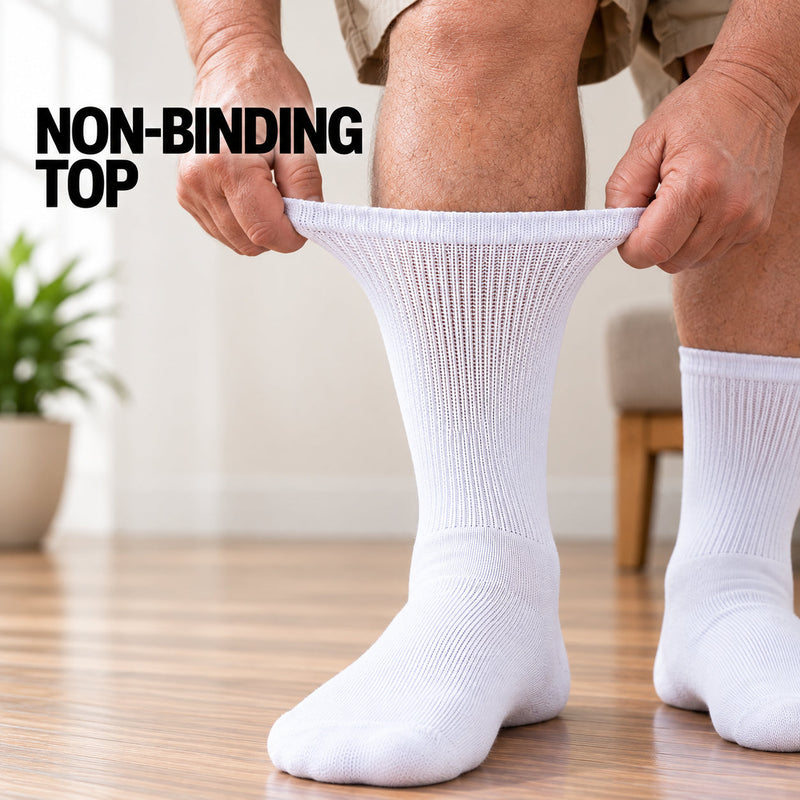
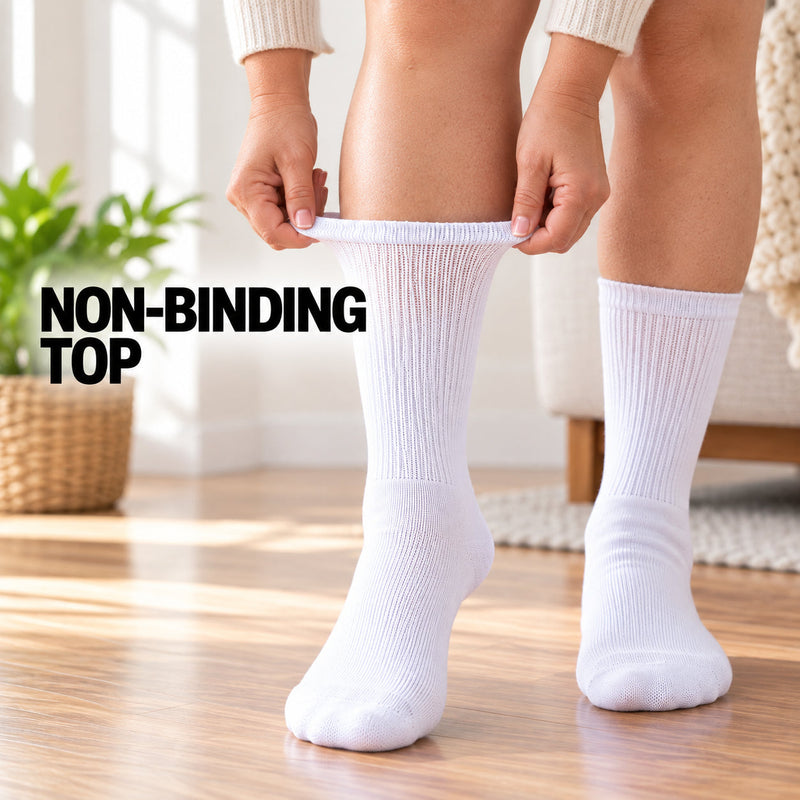
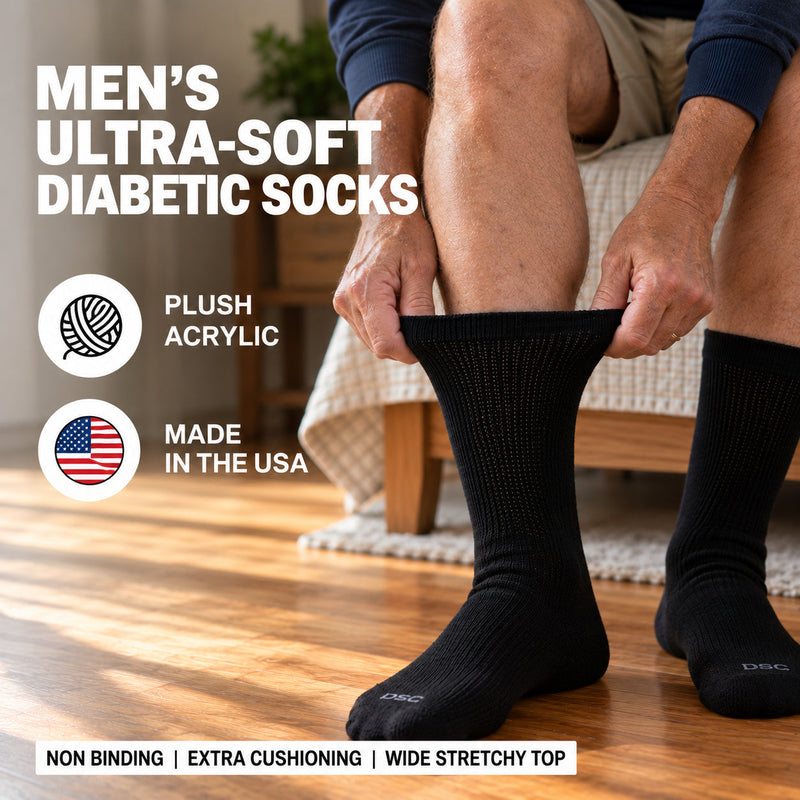
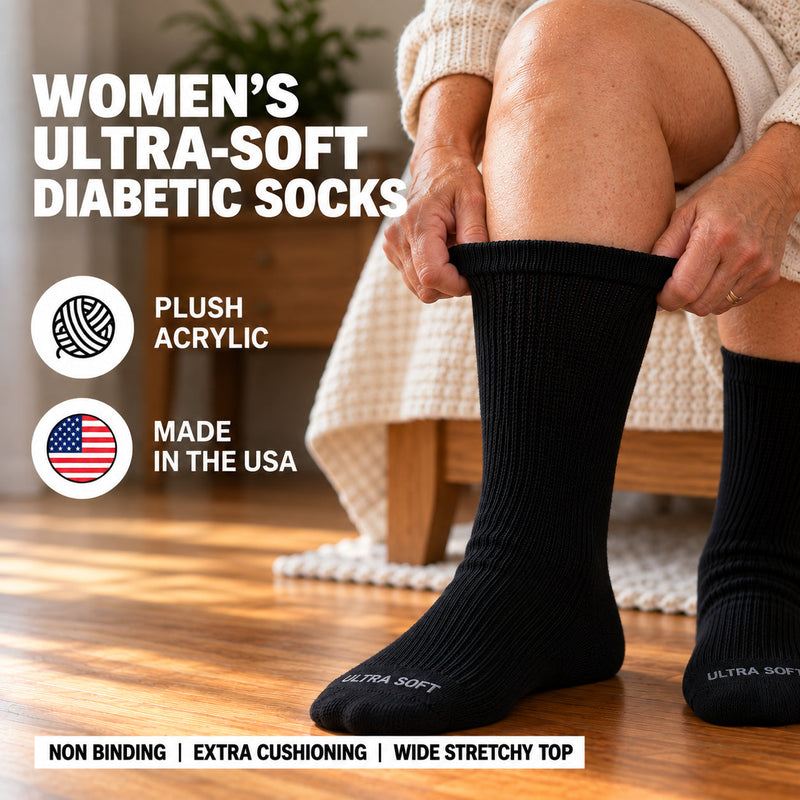
A wide, non-binding top that holds gently instead of gripping, so there is no tight band and no red ring at the end of the day.
Built smooth
A smooth, flat toe seam with no ridge to rub, and a cushioned sole underfoot. Knit on knitting machines in Alabama.
A full year to decide
Hole or worn out within a year? Send them back and we'll replace them free.
Built for feet that need room
What every pair does, whether you are on your feet all day or resting them.
Non-Binding Top
Knit wide so the hold is spread across the whole top instead of one tight elastic band. Stays up without digging in.
Room for a Wider Calf
The stretchy top opens wide and sits flat on a fuller calf or a swollen ankle, without rolling down or gripping.
Smooth Toe Seam
Finished flat, so there is no ridge sitting across your toes inside a shoe or a slipper.
Soft and Cushioned
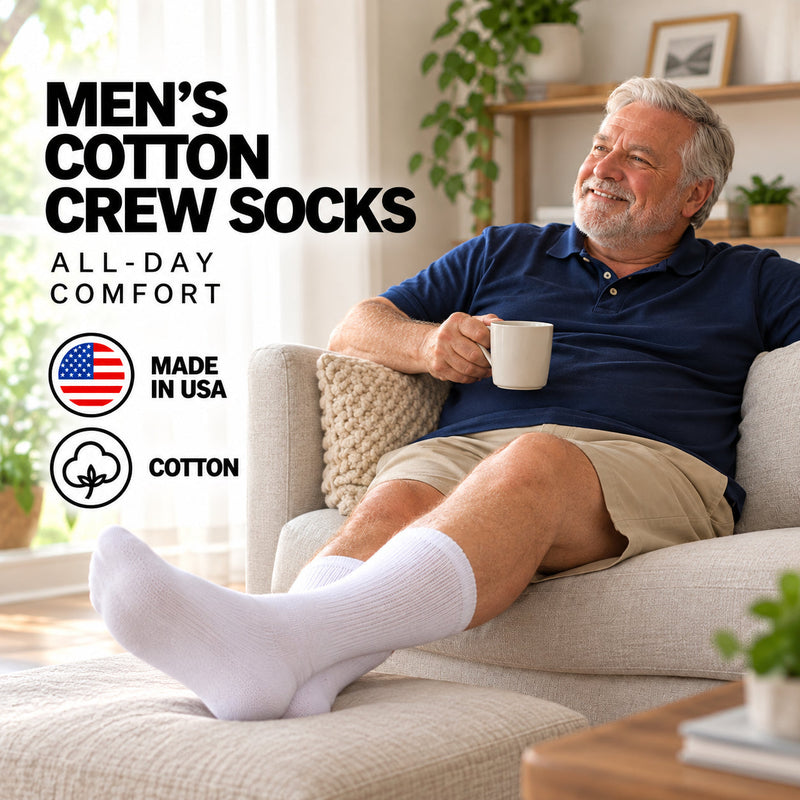
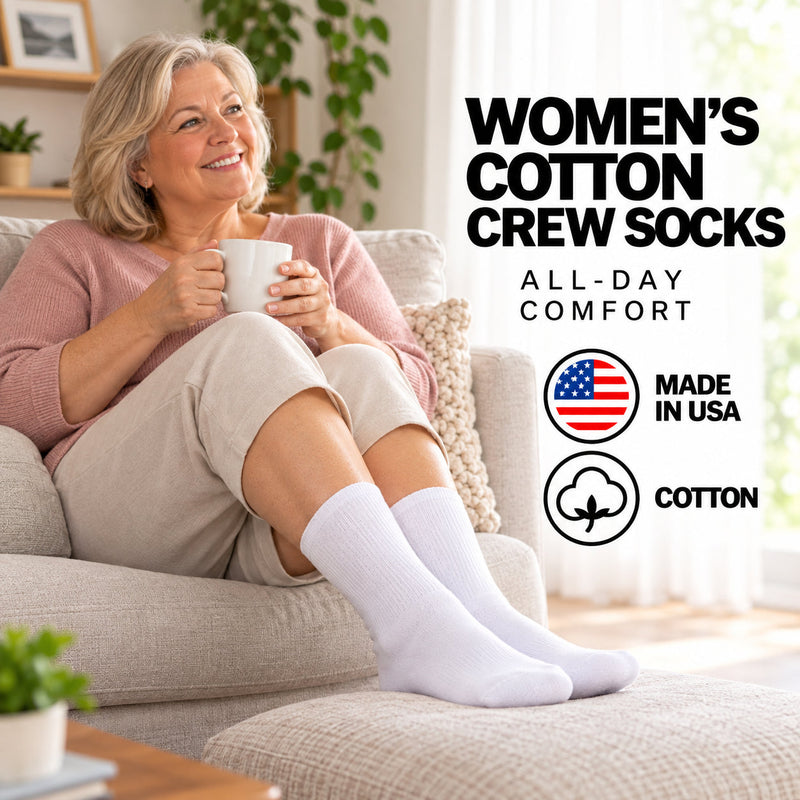
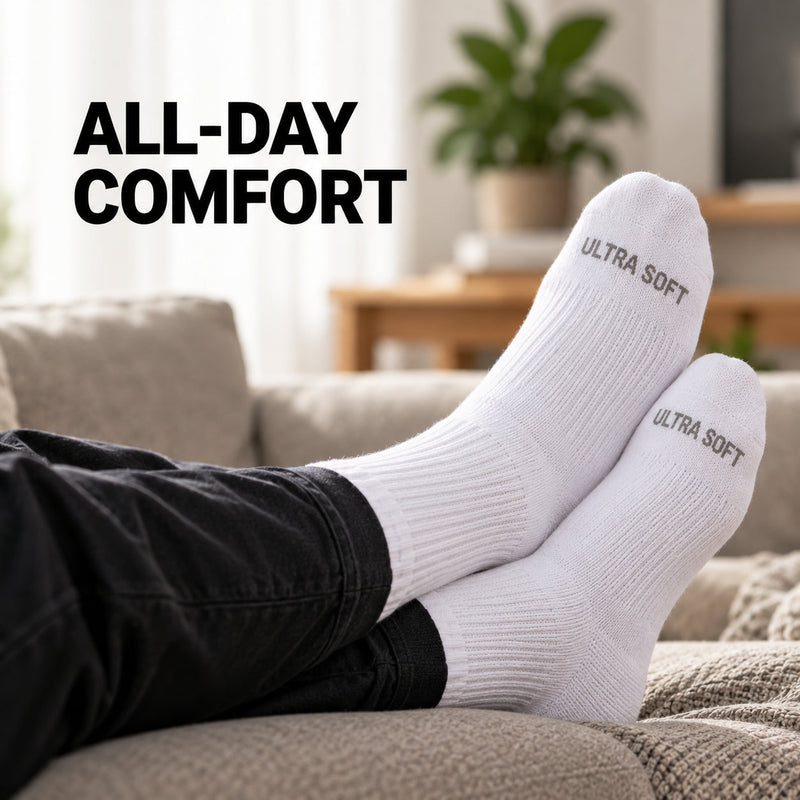
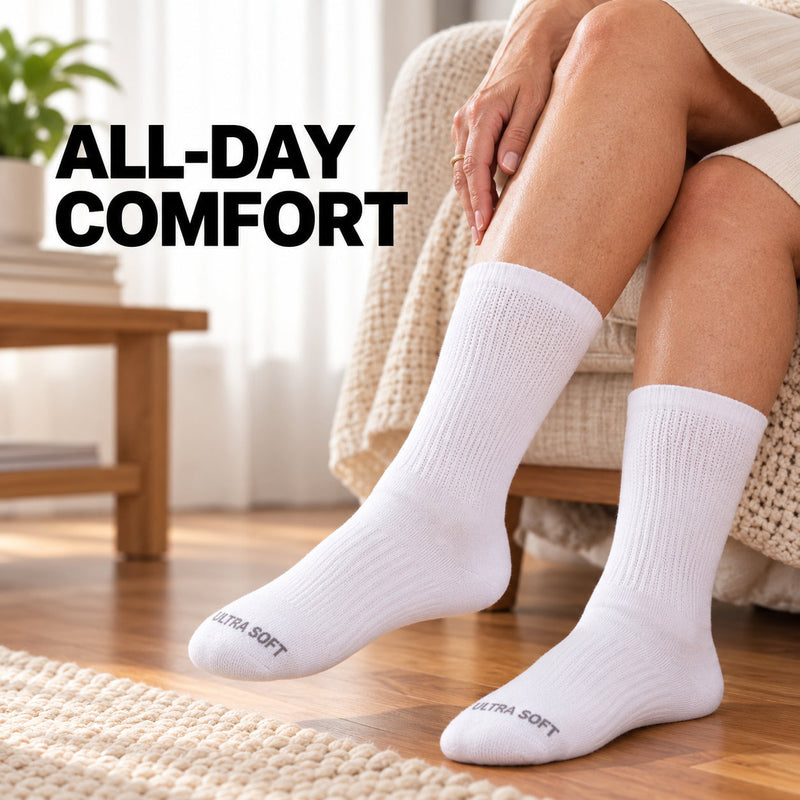
Moisture-wicking cotton with a cushioned sole, gentle on sensitive skin and comfortable for a long day on your feet.
Real feet. Real days.
Legs that have done a lot of walking, in socks that stay up and never dig in.


Questions before you order
Which style should I start with?
For everyday wear, start with the Cotton Crew: soft cotton, cushioned sole, non-binding top. If your feet are cold or your ankles swell, the Ultra-Soft Upper Calf has the widest, stretchiest top we make. If you have been told to wear compression, the Over The Calf Compression comes in three strengths.
How do the sizes run?
Sizes go by your everyday shoe size, and the exact range for each style is on its product page. Between sizes, go up.
Will they fit a wider calf?
The top is knit wide and stretchy, so it sits flat on a fuller calf without gripping. The Ultra-Soft Upper Calf has the most room. If you are unsure, call us on (800) 214-0218 and we'll tell you honestly.
What if a pair wears out?
If a pair gets a hole or wears out within a year of buying it, send it back and we'll replace it free, including the pairs you have already worn and washed.
Still not sure? Call us on (800) 214-0218, weekdays 9–3 EST.
About Neuropathy Socks
Peripheral neuropathy causes tingling, numbness, and hypersensitivity in the feet -- making ordinary socks feel painful. Our neuropathy socks are designed specifically for people with nerve damage, featuring an ultra-soft, padded lining that cushions sensitive feet without applying pressure. The smooth toe seam eliminates any ridge that could cause irritation, and the non-binding top band sits gently without constricting the leg.
Socks for neuropathy need to work differently than regular socks. That's why DSC uses a loose, non-constricting fit with moisture-wicking fabric that keeps your feet dry. Whether you have diabetic neuropathy, peripheral neuropathy from chemotherapy, or general nerve pain in your feet, these socks are knit soft, wide and smooth-seamed. For a full guide, see the best socks for neuropathy.
Not Sure Which Socks Are Right for You?
Answer 5 quick questions and we'll recommend the perfect pair.
Take the Sock Quiz →Understanding Neuropathy and Your Feet
Neuropathy is nerve damage that changes how your feet sense the world around you. Some people feel constant tingling or burning. Others lose sensation entirely and cannot tell when a blister is forming. Both situations put your feet at serious risk.
The Mayo Clinic notes that peripheral neuropathy affects an estimated 20 million Americans, with diabetes being the most common cause. When nerves are damaged, your body's early-warning system for foot injuries stops working properly.
Types of Neuropathy That Affect Your Feet
Diabetic neuropathy is the most common form, but it is not the only one. Chemotherapy-induced peripheral neuropathy, idiopathic neuropathy, and hereditary nerve conditions can all cause the same foot symptoms. The NIDDK identifies four types of diabetic neuropathy, with peripheral neuropathy being the type that most commonly affects the feet and legs.
Regardless of the cause, the result is the same: your feet need extra protection from friction, pressure, and moisture that healthy nerves would normally alert you to.
How Neuropathy Changes Your Foot Care Needs
When you cannot feel small injuries forming, your socks become your first line of defense. A wrinkled sock can create a pressure sore you never notice. A raised seam can rub a blister that goes undetected for days. Tight elastic presses on the leg, which is the thing a non-binding top is knit to avoid.
The American Diabetes Association recommends daily foot inspections and proper footwear as essential steps for preventing complications. Neuropathy socks are designed to reduce the risks that ordinary socks introduce.
Why the Right Socks May Help Protect Nerve-Damaged Feet
Neuropathy socks will not reverse nerve damage. But they can help reduce the daily irritation and injury risk that comes with it. By cutting friction and controlling moisture, the right socks may help you avoid the small injuries that lead to bigger problems.
Key Features of DSC Neuropathy Socks
Extra Cushioning for Nerve-Damaged Feet
Our neuropathy socks feature a dense, padded sole that absorbs impact with every step. The cushioning is concentrated at the ball and heel of the foot, where pressure injuries are most likely to develop. This extra layer of protection is especially important if you have lost sensation and cannot feel when your feet are under stress.
Smooth Toe Seam for Feet You Cannot Feel
Standard socks have a raised seam across the toe that creates a ridge of fabric rubbing against your skin with every step. When your feet are hypersensitive, that ridge can feel like sandpaper. When your feet are numb, that ridge can cause a blister you never notice. Our smooth toe seam construction eliminates this friction point entirely.
A Top That Doesn't Squeeze
Tight elastic bands on regular socks squeeze the calf and ankle and leave a ring by the end of the day. Our non-binding top band stays up gently without gripping, so nothing is pressing on your leg from morning to night.
- Non-binding top band — Stays up without squeezing or leaving marks on your legs
- Smooth toe seam — No raised seams to rub against hypersensitive skin
- Extra cushioned sole — Padded protection reduces pressure on the ball and heel of the foot
- Moisture-wicking fabric — Helps keep feet dry and comfortable
- Loose, non-constricting fit — Gentle enough for the most sensitive feet without sliding down
Who Should Wear Neuropathy Socks
Neuropathy socks are designed for anyone whose feet need extra protection from friction, pressure, and moisture. You may benefit from neuropathy socks if you experience:
- Tingling, burning, or numbness in your feet from diabetic neuropathy
- Peripheral neuropathy caused by chemotherapy or other medical treatments
- Hypersensitivity that makes regular socks feel painful or uncomfortable
- Loss of sensation that makes it difficult to detect blisters or pressure sores
- Frequent foot skin breakdown, dryness, or fungal infections
- Legs that feel squeezed by tight sock bands
Choosing the Right Neuropathy Sock Style
By Length
Crew length socks extend to mid-calf and provide the most coverage. They are ideal for work boots, dress shoes, and cooler weather. Ankle length socks sit just above the ankle bone and work well with sneakers, casual shoes, and warmer days.
By Condition
If your primary concern is sensitivity and pain without significant swelling, standard neuropathy socks provide maximum comfort with zero pressure. If you also experience swelling or edema, our diabetic compression socks combine graduated pressure with the smooth-seamed design you need.
By Material
Our non-binding crew and ankle socks use a soft cotton blend, and our Ultra-Soft socks use a brushed, plush knit that's gentlest on hypersensitive skin. Both pull moisture away from your skin to help keep feet dry. For tired feet at the end of the day, pair your socks with our Cooling Peppermint Hemp Cream.
Neuropathy Socks vs. Diabetic Socks vs. Compression Socks
These three types of socks share many features, but they serve different primary purposes. Understanding the differences may help you choose the right option for your feet.
Neuropathy socks prioritize cushioning and softness for hypersensitive or numb feet. They have the thickest padding and the gentlest materials. Diabetic socks focus on overall foot protection with non-binding fit, smooth toe seams, and moisture control. Compression socks add graduated pressure and are meant to feel snug.
At DSC, all of our socks include the core diabetic-safe features: non-binding top, smooth toe seam, and moisture-wicking fabric. The difference is in the emphasis. If nerve pain or numbness is your biggest concern, neuropathy socks are designed specifically for you. If swelling is also a factor, compression socks with diabetic-safe design may be a better fit.
For a deeper dive into which option is right for you, read our guides to the best socks for neuropathy, neuropathy socks for men and neuropathy socks for women.
The DSC Value
The more packs you add, the lower the price per pair: up to 37% off at four packs, applied automatically at checkout. Every DSC pair also comes with a 1-year replacement guarantee.
Autoship & Save takes an extra 15% off every delivery, with free shipping, on socks knit in Alabama.
1-Year Replacement Guarantee
If your socks wear out within a year, we replace them free. No questions asked.
Rated 4.6 out of 5 from more than 3,850 reviews. All socks are made in the USA and ship free on every order.
Common Questions About Neuropathy Socks
What kind of socks are best for neuropathy?
The best socks for neuropathy have a smooth toe seam (no ridges to irritate), extra cushioning (to protect against pressure injuries), a non-binding top (nothing squeezing the leg), and moisture-wicking materials (to keep feet dry). All DSC neuropathy socks include these features.
Do neuropathy socks actually help with nerve pain?
Neuropathy socks won't cure nerve damage, but they can reduce everyday irritation and discomfort by cutting down friction, pressure points, and constriction.
Should I wear neuropathy socks to bed?
Many people with neuropathy find that wearing soft, non-binding socks to bed helps them get comfortable at night. Our ultra-soft upper calf socks are particularly popular for overnight wear because they are gentle enough to sleep in without squeezing.
What is the difference between neuropathy socks and diabetic socks?
Neuropathy socks and diabetic socks share similar features -- non-binding fit, smooth toe seam, moisture-wicking fabric. The difference is emphasis: neuropathy socks have extra cushioning and softer materials specifically for hypersensitive feet, while all diabetic socks prioritize an easy, non-binding fit and skin protection. At DSC, all our socks include features that benefit both conditions.
Can neuropathy socks help with numbness in feet?
While socks cannot reverse numbness caused by nerve damage, they provide a critical layer of protection for feet that cannot feel injuries. When you can't feel a blister forming, a cut, or a pressure sore, neuropathy socks act as a barrier against the friction and moisture that cause these problems.
How often should I replace my neuropathy socks?
Replace neuropathy socks every 3 to 6 months, or sooner if the cushioning feels flat or the fabric shows thinning. Worn-out socks lose the padding and moisture-wicking properties that protect your feet. DSC socks come with a 1-year replacement guarantee, so if they wear out early, we replace them free.