
Non-Binding Diabetic Socks
Non-binding socks stay up without squeezing your legs.
- Free shipping on every order
- 1-year replacement guarantee
- Knit in Alabama
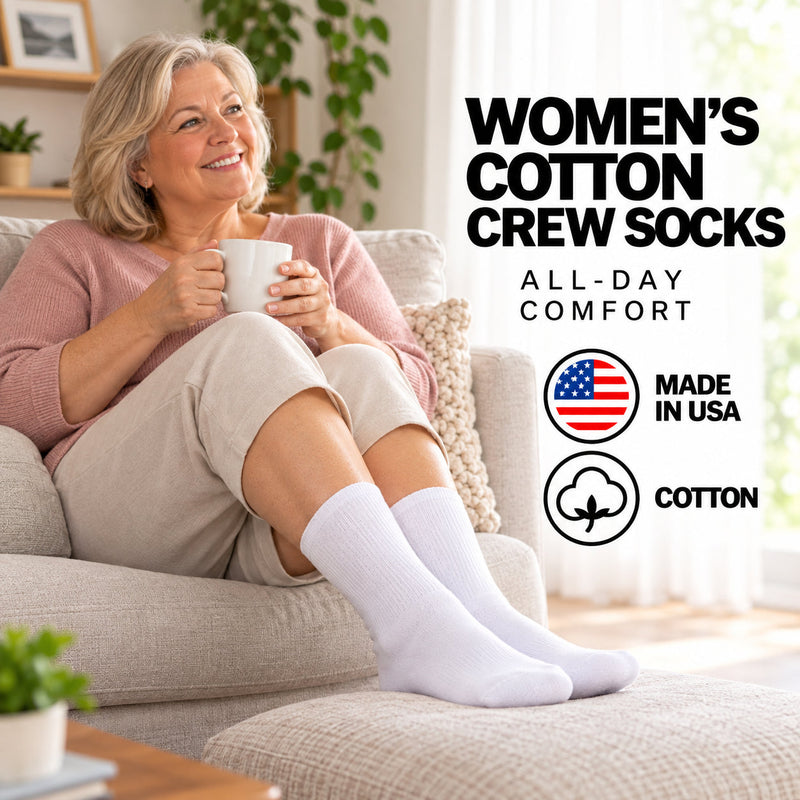
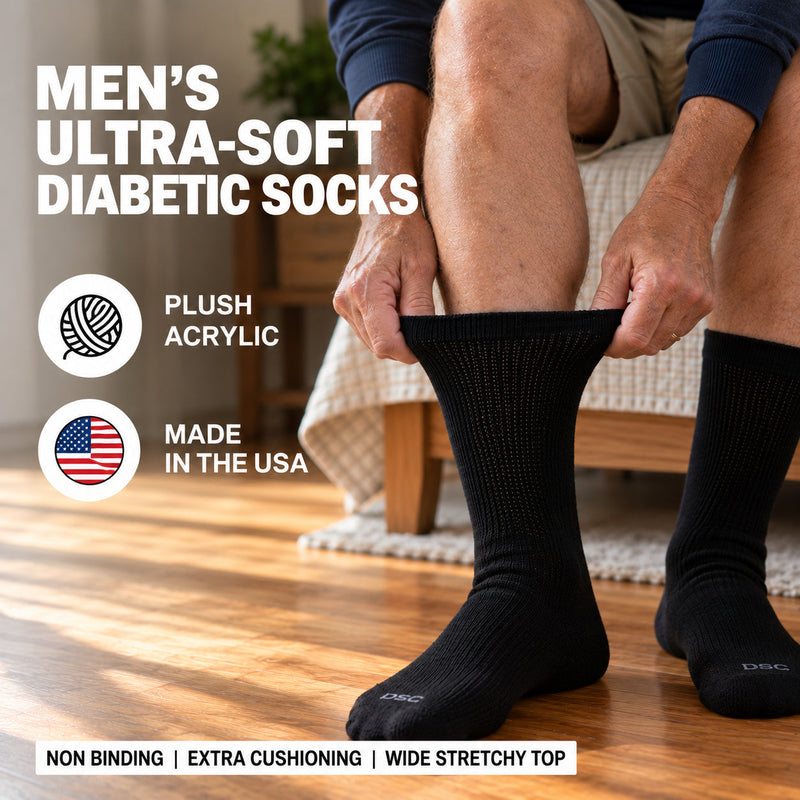
Wear them. Wash them. Still covered.
If a pair gets a hole or wears out within a year, send it back and we replace it free.
How it works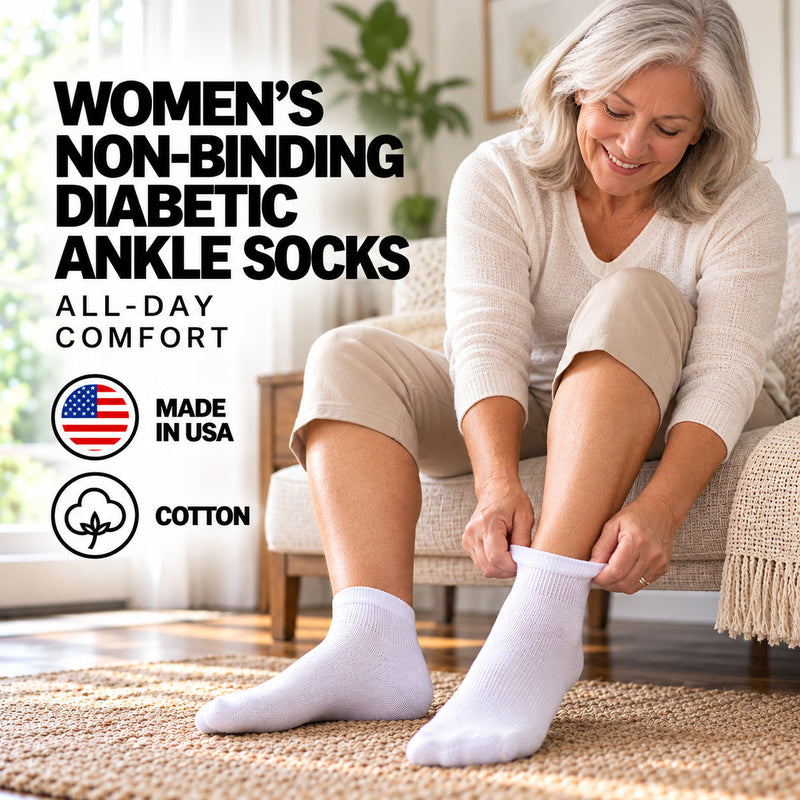
Why pick Diabetic Sock Club?
No squeeze
A wide, non-binding top that holds gently instead of gripping, so there is no tight band and no red ring at the end of the day.
Built smooth
A smooth, flat toe seam with no ridge to rub, and a cushioned sole underfoot. Knit on knitting machines in Alabama.
A full year to decide
Hole or worn out within a year? Send them back and we'll replace them free.
Built for feet that need room
What every pair does, whether you are on your feet all day or resting them.
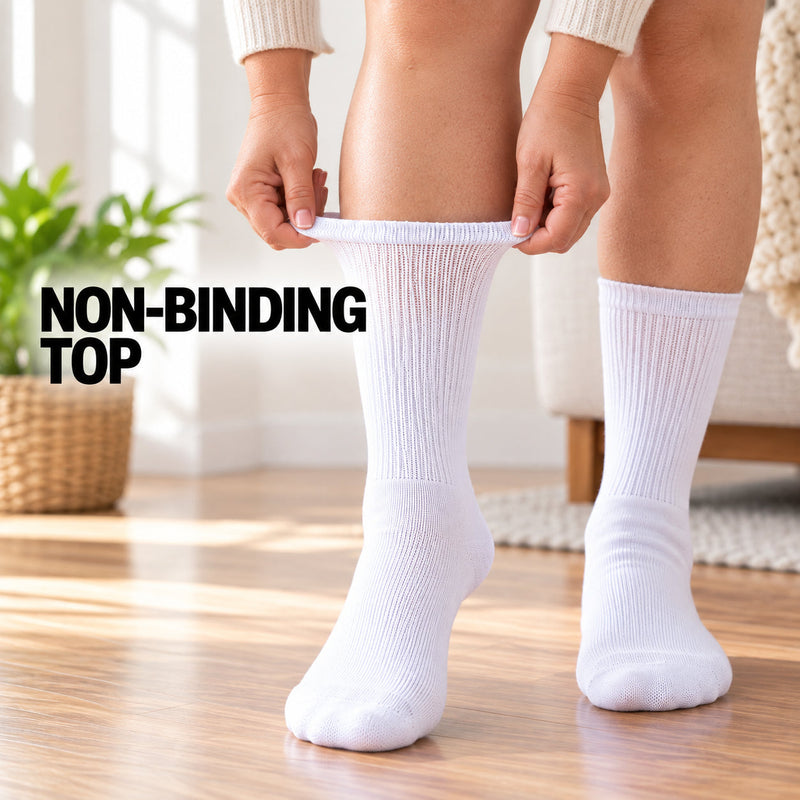
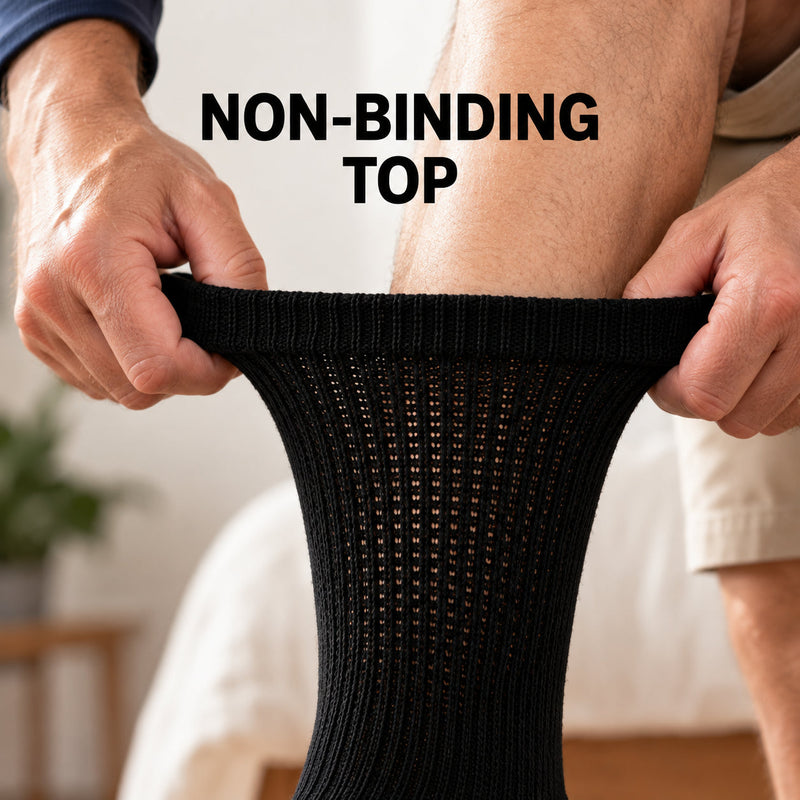
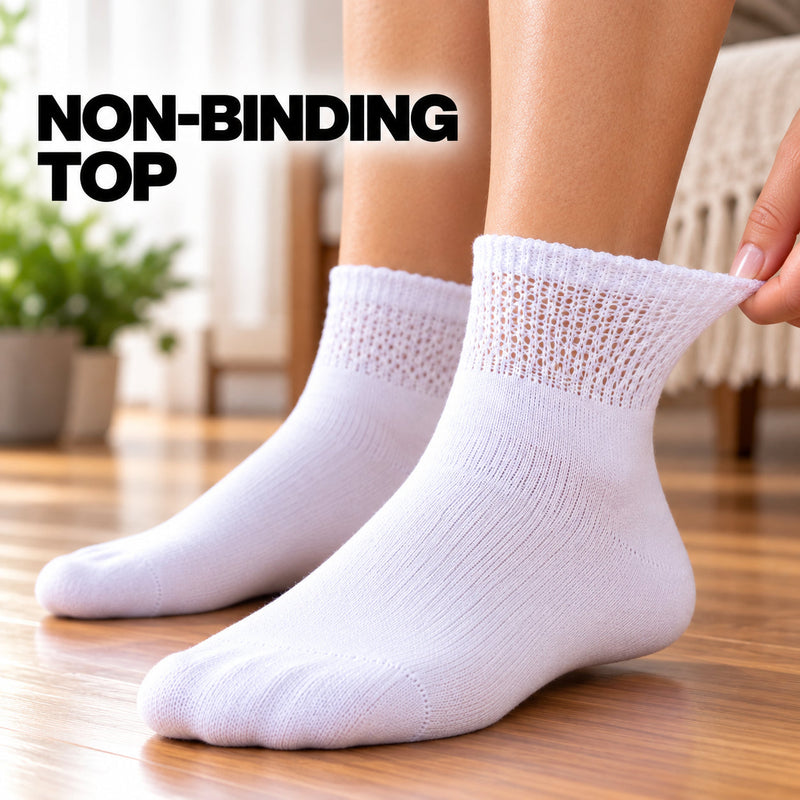
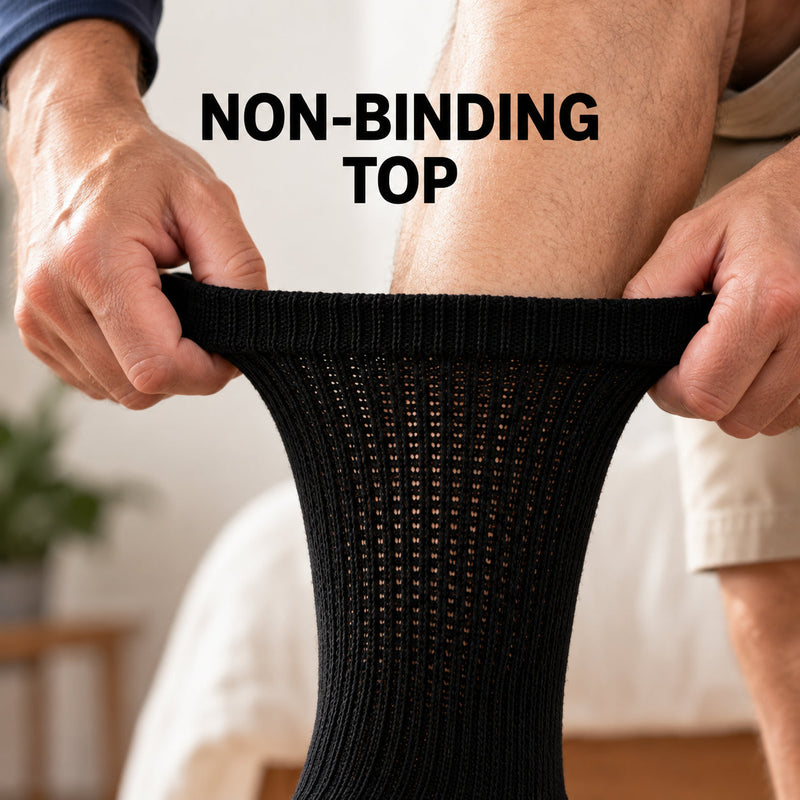
Non-Binding Top
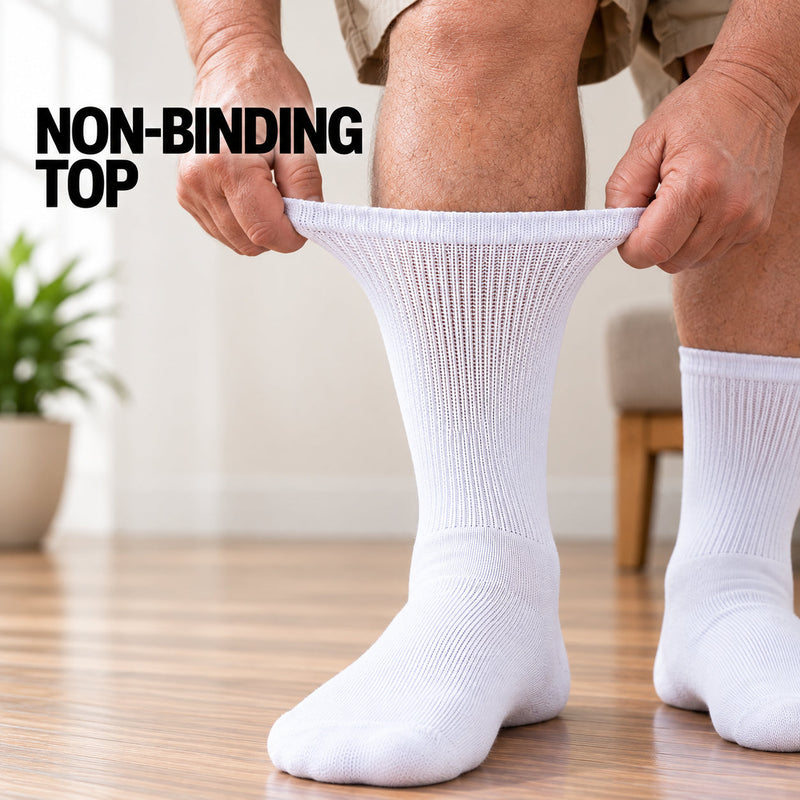
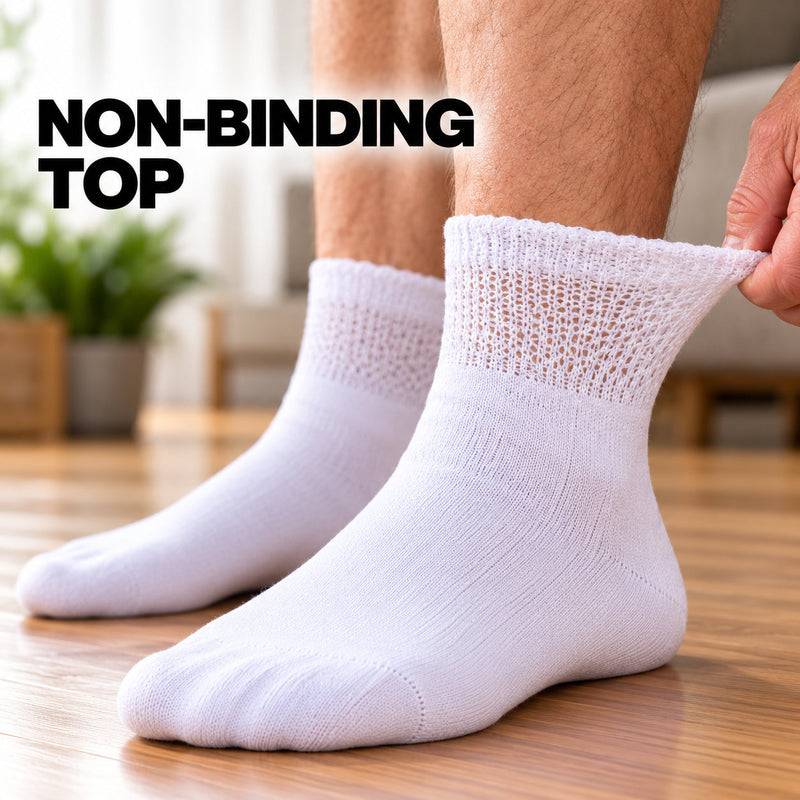
Knit wide so the hold is spread across the whole top instead of one tight elastic band. Stays up without digging in.
Room for a Wider Calf
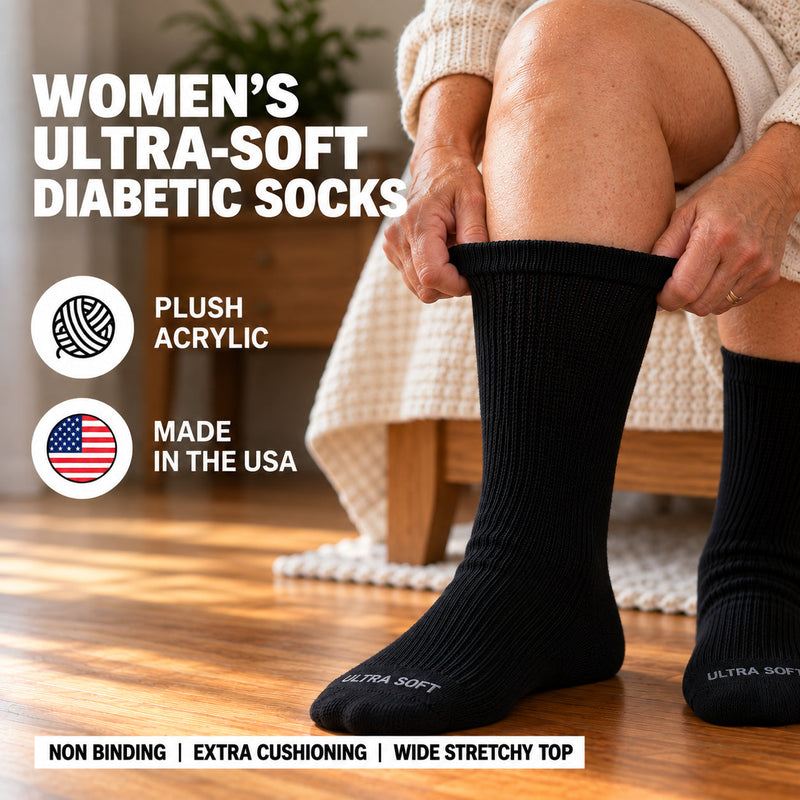
The stretchy top opens wide and sits flat on a fuller calf or a swollen ankle, without rolling down or gripping.
Smooth Toe Seam
Finished flat, so there is no ridge sitting across your toes inside a shoe or a slipper.
Soft and Cushioned
Moisture-wicking cotton with a cushioned sole, gentle on sensitive skin and comfortable for a long day on your feet.
Real feet. Real days.
Legs that have done a lot of walking, in socks that stay up and never dig in.


Questions before you order
Which style should I start with?
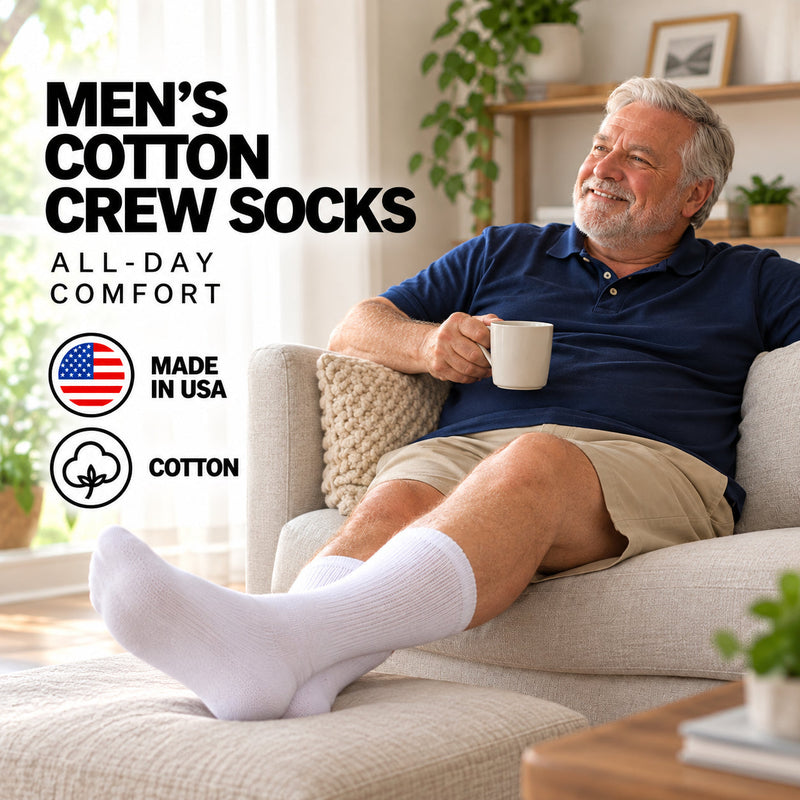
For everyday wear, start with the Cotton Crew: soft cotton, cushioned sole, non-binding top. If your feet are cold or your ankles swell, the Ultra-Soft Upper Calf has the widest, stretchiest top we make. If you have been told to wear compression, the Over The Calf Compression comes in three strengths.
How do the sizes run?
Sizes go by your everyday shoe size, and the exact range for each style is on its product page. Between sizes, go up.
Will they fit a wider calf?
The top is knit wide and stretchy, so it sits flat on a fuller calf without gripping. The Ultra-Soft Upper Calf has the most room. If you are unsure, call us on (800) 214-0218 and we'll tell you honestly.
What if a pair wears out?
If a pair gets a hole or wears out within a year of buying it, send it back and we'll replace it free, including the pairs you have already worn and washed.
Still not sure? Call us on (800) 214-0218, weekdays 9–3 EST.
About Non-Binding Diabetic Socks
Non-binding socks stay up without squeezing your legs. Instead of the narrow band of tight elastic that holds an ordinary sock up — and leaves a groove in the leg by evening — a non-binding sock has a wide, relaxed top that spreads the hold across the whole cuff. It stays at mid-calf all day, and when it comes off at night there is no red ring. Diabetic Sock Club has knit non-binding diabetic socks in Alabama for years: smooth toe seam, moisture-wicking cotton, cushioned sole, free shipping on every order and a 1-year replacement guarantee.
Shop men's and women's non-binding socks in crew, ankle and ultra-soft upper-calf styles, or over-the-calf compression socks whose top cuff is also knit wide so it does not bite.
Not Sure Which Socks Are Right for You?
Answer 5 quick questions and we'll recommend the right pair.
Take the Sock Quiz →What "non-binding" means
Look at the top of a regular sock and you will see a tight, ribbed band an inch or so deep. That band is doing all the work of keeping the sock up, and it does it by gripping. A non-binding top is knit wider and with far less elastic, so the sock holds by fitting the leg rather than clamping it. It is not loose — it stays where you put it — but there is no single line of pressure.
The sock-mark test
Take your socks off at the end of the day and look at your legs. A ring, a groove, or a red band where the cuff sat means the sock has been gripping all day. That mark is what a non-binding sock is designed not to leave. If you have been wondering how long sock marks should last or why tight socks leave marks, the short answer is: change the sock.
Who wears non-binding socks
- Anyone whose regular socks leave a mark or indentation around the leg
- People with diabetes who have been told to avoid socks with a tight top band
- People whose legs or ankles are larger by evening than in the morning, and who want a sock that gives rather than grips
- People with sensitive skin
- Anyone who just prefers a softer, looser-topped sock
If you have a foot or leg condition and you are unsure what to wear, ask your doctor or podiatrist. We make socks; we do not give medical advice.
Non-binding socks vs. compression socks
They do opposite jobs. A non-binding sock is built to apply as little pressure as possible. A compression sock applies graduated pressure on purpose — firmest at the ankle, easing off up the leg — in a strength measured in mmHg. Ours are knit in 8–15 (light), 15–20 (medium) and 20–30 mmHg (firm), and even the compression socks have a top cuff knit wide so the very top does not bite. If you are not sure which is right for you, ask your doctor or pharmacist. More in diabetic socks vs. compression socks.
Non-binding sock styles
Crew
Sits at the lower calf, works with most shoes, the pack most customers reorder. Men's crew · Women's crew
Ankle
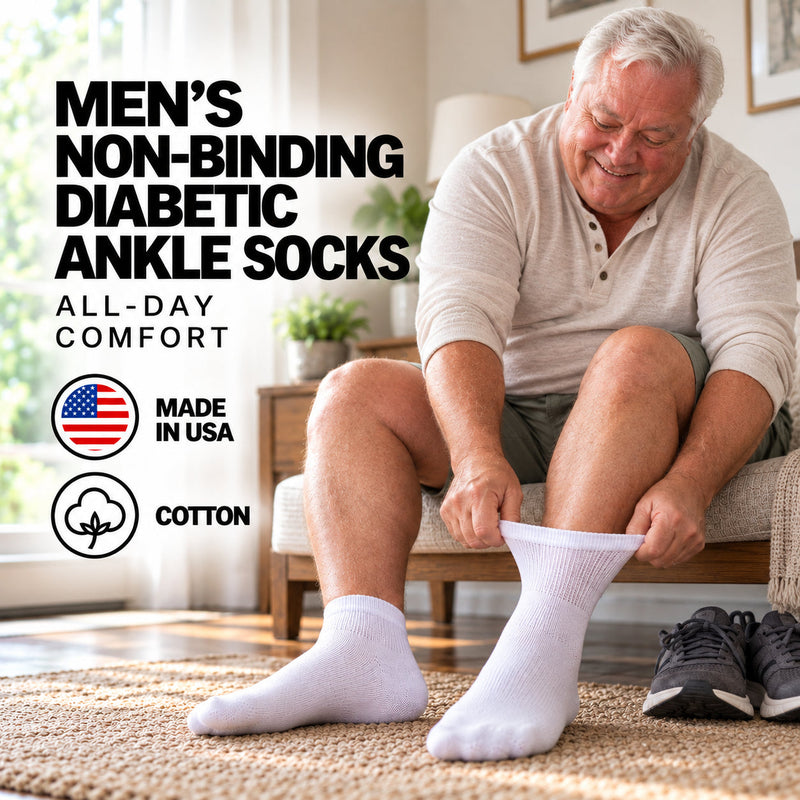
A low cut for sneakers and warm weather, with a cuff that is still non-binding. Men's ankle · Women's ankle
Ultra-soft upper calf
A thicker, plush knit that reaches the upper calf, for cold feet and extra cushion. Men's ultra-soft · Women's ultra-soft
What they're made of
80% cotton, 15% polyester, 5% Lycra: soft and breathable, with enough stretch to keep their shape through the wash. Knit on knitting machines in Alabama, shipped from North Carolina. Machine wash cold, tumble dry low, and skip the fabric softener — it coats the fibres and flattens the stretch that keeps the top non-binding.
Why buy from Diabetic Sock Club
Our socks carry a 4.6-out-of-5 rating from more than 3,800 customer reviews. Every order ships free with no minimum, and every pair is covered by our replacement guarantee: if a sock gets a hole or wears out within a year of buying it, send it back and we replace it free. Unworn socks can be returned within 30 days for a refund.
1-Year Replacement Guarantee
Hole or worn out within a year? Send them back and we'll replace them free.
Common questions about non-binding socks
Do non-binding socks fall down?
No. The top is knit wide so the hold is spread across the whole cuff instead of one tight band. It stays at mid-calf all day without sliding down and without digging in.
Are non-binding socks the same as diabetic socks?
A non-binding top is the defining feature of a diabetic sock, alongside a smooth toe seam and moisture-wicking fabric. All of our diabetic socks are non-binding; you do not need diabetes to wear them.
What size should I order?
Pick the size that covers your shoe size; between sizes, size up. Men's: Medium 6–8, Large 9–12, X-Large 12–14. Women's: Small 4–7, Medium 7.5–10, Large 10.5–13.5.
Where are they made?
Knit on knitting machines in Alabama and shipped from North Carolina. Every order ships free in the US.